An Aristocratic Scalding
Just bind his hands and scald the infant,
oh that histrionic shrieking?
It’s just the steam leaving.
Have you no saltines for the brain?
What tasty swimmerets!
I said clean up boy,
his skull is still spewing
that nefarious discharge upon her linen
and it’s already half past nine
Have you no butter for antennules?
spatters of whiskey and
sperm receptacles dot the beards and
vilify the entre-doux
upon which was served the feast
Tuesday, October 21, 2008

Tuesday, October 14, 2008
John Berryman
John Berryman ( Born John Allyn Smith)
Born in born in McAlester, Oklahoma October 25, 1914 – January 7, 1972
Active 1942-1972
Founder of the confessional school of poetry
Biogr aphy
aphy
John Allyn Smith was born in 1914 in Oklahoma to John Allyn Smith Senior and Martha Little Smith. When he was 12, his father shot himself outside of John’s window. His mother moved to Florida where she remarried and John Allyn Smith became John Berryman. Berryman attended the South Kent boarding school, and eventually went to Columbia University for an English degree. While at Columbia he accomplished two things, becoming an alcoholic and writing for literary journals. After attending Columbia he went to Clare University in Cambridge on a scholarship he received.
After this year, he became diagnosed with epilepsy and depression.
He taught at several colleges such as Harvard and Princeton.
He married Eileen Patricia Mulligan in the 1940s.
His wife eventually left him and he turned even more to alcohol, now spending nights in jail and failing to show up for the writers’ workshops he taught at the University of Iowa. The university eventually forced him to resign. Allan Tate offered him a position at the University of Minnesota where he taught until his untimely death. It was here where he remarried, twice. To Anne Levine, then Kate Donahue. All together he had 2 daughters and a son.
Like his life, his poetry was also tormented and brilliant, taking great liberties with syntax and rich with inner angst. His most notable work is “The Dream Songs” where he writes what most believe to be an autobiography of sorts with him being represented by the main character Henry. Henry, like Berryman, has to deal with alcoholism and paternal suicide.
In his later years his alcoholism and depression made him unable to speak at readings and even write poems. Eventually from all this he killed himself by jumping off the Washington Avenue Bridge in Minnesota.
Throughout his life he won the following awards: Oldham Shakespeare Prize, Poetry Society of America’s Shelley Memorial award (1948), American Academy award for poetry (1950), National Institute of Arts and Letters Award (1950), the Levinson Prize (1950), the Guggenheim Fellowship (1952, 1966), Academy of American Poets, The Pulitzer Prize (1964), National Endowment for the Arts award (1967), National Book Award (1969), and the Bollingen Award (1969).
Works consulted:
http://en.wikipedia.org/wiki/John_Berryman
http://project1.caryacademy.org/echoes/03-04/John_Berryman/DefaultJohn_Berryman.htm
http://www.answers.com/topic/john-berryman
Modern Critical Views- John Berryman, by Harold Bloom
Works
Poems (Norfolk, Ct.: New Directions Press, 1942)
The Dispossessed (New York: William Sloan Associates, 1948)
Homage to Mistress Bradstreet (New York: Farrar, Straus & Giroux, 1956)
77 Dream Songs (New York: Farrar, Straus & Giroux, 1964)
Berryman's Sonnets (New York: Farrar, Straus & Giroux, 1967)
The Dream Songs (New York: Farrar, Straus & Giroux, 1969)
His Toy, His Dream His Rest (New York: Farrar, Straus & Giroux, 1969)
Love & Fame (New York: Farrar, Straus & Giroux, 1970)
Delusions, Etc. (New York: Farrar, Straus & Giroux, 1972)
Moods
Autumnal- “I am outside/incredible panic rules. /People are blowing and beating each other without mercy”
Depressed- “Bright eyed and bushy tailed woke not Henry up/…Alone. They all abandoned Henry.”
Eerie- “A fortnight later, sense a single man/upon the trampled scene at 2 a.m./insomnia plagued with a shovel/digging like mad, Lazarus with a plan” (about digging up a corpse).
Morbid- “The iron pear which rammed into his mouth/swells up to four times ordinary size/slowly cracking his skull open”
Reflective- “My mother was scared almost to death, he was going to swim out with me, forevers” (His father had threatened to drown himself and John), and on his fathers suicide “Never see my son/easy be not to see anyone/combers out to see/know they’re goin somewhere but not me/got a little poison, got a little gun.”
Wry- “I am so wise I had my mouth sewn shut…I am teenage cancer, with a plan”
Style
Confessional- Confessional poetry began in the 1950s and 1960s by poets such as John Berryman, Sylvia Plath, Allen Ginsberg, Anne Sexton, and Robert Lowell. In this genre poets exposed themselves and their emotions rather than using the poem as a mask. The poetry explored details about the writers’ life with out holding back. The results were sometimes ugly, always candid with confessions about sex, life, depression, and haunting memories. This may be why the genre is considered a way for the writer to “out their demons”. Many poets in this genre had great private distress, and it is notable that most of the great founders of it killed themselves (Plath, Berryman, and Sexton). That is why this genre is so well read; it combines private pity and torment with public poetic form and art.
Berrymans whole book “The Dream Songs” is an example of this genre, discussing his fathers’ death, and feelings of alienation in real life. Berryman makes the main character in the book, Henry represent him. Henry feels and goes through many of the things that happened to Berryman if one looks up a biography about Berryman. Berryman lost his rigid syntax in this book and instead adapted a chaotic blend of syntax, tone, diction, humor, and wrenching sorrow as he plunged deeper into his psyche in this book.
Similar Artists
Followers-
Marie Howe- Marie Howe is a current poet, who writes books about real issues in her life. Her book “What the Living Do” reflects upon her brothers’ death from AIDS in a series of poems and essays. It is said to be “a haunting lament for her brother with the plain-spoken last line: ‘I am living, I remember you.’” She, like Berryman, explores relationships and attachment in personal terms in their poetry.
Influenced by-
Allen Tate- Allen Tate influenced Berryman. Tate, one of the founders of modern poetry, was a mentor to Berryman. He also was a professor at the University of Minnesota. His poems were extremely personal, filled with reflection upon himself. He often focused on ideas such as death, spiritual rebirth, and alienation. These themes and reflection are present in Berryman’s work.
Yeats- Berryman once said, “I didn't want to be like Yeats; I wanted to be Yeats.” And “Then came Yeats, who I didn’t so much wish to resemble as to be”. What more proof is needed that Berryman emulated Yeats? One of the most common examples is comparing Yeats’ “Crazy Jane” to Berryman’s poem “Young Woman’s Song”. His most notable work, “The Dream Songs” takes it’s stanza layout from Yeats, said Berryman in an interview. And, like Yeats, Berryman used great technical control in poems.
Born in born in McAlester, Oklahoma October 25, 1914 – January 7, 1972
Active 1942-1972
Founder of the confessional school of poetry
Biogr
aphyJohn Allyn Smith was born in 1914 in Oklahoma to John Allyn Smith Senior and Martha Little Smith. When he was 12, his father shot himself outside of John’s window. His mother moved to Florida where she remarried and John Allyn Smith became John Berryman. Berryman attended the South Kent boarding school, and eventually went to Columbia University for an English degree. While at Columbia he accomplished two things, becoming an alcoholic and writing for literary journals. After attending Columbia he went to Clare University in Cambridge on a scholarship he received.
After this year, he became diagnosed with epilepsy and depression.
He taught at several colleges such as Harvard and Princeton.
He married Eileen Patricia Mulligan in the 1940s.
His wife eventually left him and he turned even more to alcohol, now spending nights in jail and failing to show up for the writers’ workshops he taught at the University of Iowa. The university eventually forced him to resign. Allan Tate offered him a position at the University of Minnesota where he taught until his untimely death. It was here where he remarried, twice. To Anne Levine, then Kate Donahue. All together he had 2 daughters and a son.
Like his life, his poetry was also tormented and brilliant, taking great liberties with syntax and rich with inner angst. His most notable work is “The Dream Songs” where he writes what most believe to be an autobiography of sorts with him being represented by the main character Henry. Henry, like Berryman, has to deal with alcoholism and paternal suicide.
In his later years his alcoholism and depression made him unable to speak at readings and even write poems. Eventually from all this he killed himself by jumping off the Washington Avenue Bridge in Minnesota.
Throughout his life he won the following awards: Oldham Shakespeare Prize, Poetry Society of America’s Shelley Memorial award (1948), American Academy award for poetry (1950), National Institute of Arts and Letters Award (1950), the Levinson Prize (1950), the Guggenheim Fellowship (1952, 1966), Academy of American Poets, The Pulitzer Prize (1964), National Endowment for the Arts award (1967), National Book Award (1969), and the Bollingen Award (1969).
Works consulted:
http://en.wikipedia.org/wiki/John_Berryman
http://project1.caryacademy.org/echoes/03-04/John_Berryman/DefaultJohn_Berryman.htm
http://www.answers.com/topic/john-berryman
Modern Critical Views- John Berryman, by Harold Bloom
Works
Poems (Norfolk, Ct.: New Directions Press, 1942)
The Dispossessed (New York: William Sloan Associates, 1948)
Homage to Mistress Bradstreet (New York: Farrar, Straus & Giroux, 1956)
77 Dream Songs (New York: Farrar, Straus & Giroux, 1964)
Berryman's Sonnets (New York: Farrar, Straus & Giroux, 1967)
The Dream Songs (New York: Farrar, Straus & Giroux, 1969)
His Toy, His Dream His Rest (New York: Farrar, Straus & Giroux, 1969)
Love & Fame (New York: Farrar, Straus & Giroux, 1970)
Delusions, Etc. (New York: Farrar, Straus & Giroux, 1972)
Moods
Autumnal- “I am outside/incredible panic rules. /People are blowing and beating each other without mercy”
Depressed- “Bright eyed and bushy tailed woke not Henry up/…Alone. They all abandoned Henry.”
Eerie- “A fortnight later, sense a single man/upon the trampled scene at 2 a.m./insomnia plagued with a shovel/digging like mad, Lazarus with a plan” (about digging up a corpse).
Morbid- “The iron pear which rammed into his mouth/swells up to four times ordinary size/slowly cracking his skull open”
Reflective- “My mother was scared almost to death, he was going to swim out with me, forevers” (His father had threatened to drown himself and John), and on his fathers suicide “Never see my son/easy be not to see anyone/combers out to see/know they’re goin somewhere but not me/got a little poison, got a little gun.”
Wry- “I am so wise I had my mouth sewn shut…I am teenage cancer, with a plan”
Style
Confessional- Confessional poetry began in the 1950s and 1960s by poets such as John Berryman, Sylvia Plath, Allen Ginsberg, Anne Sexton, and Robert Lowell. In this genre poets exposed themselves and their emotions rather than using the poem as a mask. The poetry explored details about the writers’ life with out holding back. The results were sometimes ugly, always candid with confessions about sex, life, depression, and haunting memories. This may be why the genre is considered a way for the writer to “out their demons”. Many poets in this genre had great private distress, and it is notable that most of the great founders of it killed themselves (Plath, Berryman, and Sexton). That is why this genre is so well read; it combines private pity and torment with public poetic form and art.
Berrymans whole book “The Dream Songs” is an example of this genre, discussing his fathers’ death, and feelings of alienation in real life. Berryman makes the main character in the book, Henry represent him. Henry feels and goes through many of the things that happened to Berryman if one looks up a biography about Berryman. Berryman lost his rigid syntax in this book and instead adapted a chaotic blend of syntax, tone, diction, humor, and wrenching sorrow as he plunged deeper into his psyche in this book.
Similar Artists
Followers-
Marie Howe- Marie Howe is a current poet, who writes books about real issues in her life. Her book “What the Living Do” reflects upon her brothers’ death from AIDS in a series of poems and essays. It is said to be “a haunting lament for her brother with the plain-spoken last line: ‘I am living, I remember you.’” She, like Berryman, explores relationships and attachment in personal terms in their poetry.
Influenced by-
Allen Tate- Allen Tate influenced Berryman. Tate, one of the founders of modern poetry, was a mentor to Berryman. He also was a professor at the University of Minnesota. His poems were extremely personal, filled with reflection upon himself. He often focused on ideas such as death, spiritual rebirth, and alienation. These themes and reflection are present in Berryman’s work.
Yeats- Berryman once said, “I didn't want to be like Yeats; I wanted to be Yeats.” And “Then came Yeats, who I didn’t so much wish to resemble as to be”. What more proof is needed that Berryman emulated Yeats? One of the most common examples is comparing Yeats’ “Crazy Jane” to Berryman’s poem “Young Woman’s Song”. His most notable work, “The Dream Songs” takes it’s stanza layout from Yeats, said Berryman in an interview. And, like Yeats, Berryman used great technical control in poems.
Joshua Beckman
Joshua Beckman
Born in New Haven CT, year unknown-Current
Active 1998-Current
American Poet
Biography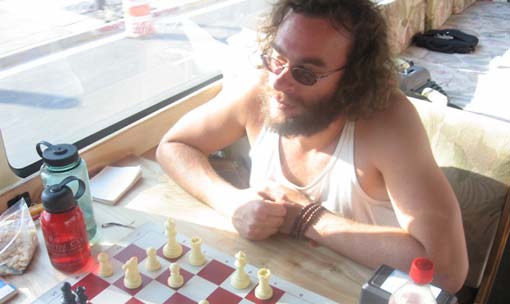
Not much is available on Joshua Beckman, probably because he is still alive and young and one only becomes noticed posthumously or certainly once one attains grey hair. Beckman was born in New Haven, Connecticut, and he attended Hampshire College in Amherst, Massachusetts, where he was the editor of a literary magazine called “Object Lesson”.
He currently lives on Staten Island and is an editor at “Wave Books” where he also translates literary works. He has won a NYFA fellowship, Pushcart Prize, first annual Honickman / APR book award
Beckmans work is said to “mourn the depravity of American urban life while celebrating (sometimes with a bit of irony) the fleeting transcendence of love, sex and fun” and he is known for his sardonic wit and sad humor. He writes using few words, sometimes with snippets of meta-poetry, and creates landscapes, scenes, and brief moments. His poems are distinct in their brevity and dryness, and they convert everything to almost an existential plane.
Works Consulted:
http://www.biographybase.com/biography/Beckman_Joshua.html
http://www.wavepoetry.com/authors/31
http://www.amazon.com/Shake-Joshua-Beckman/dp/193351700X/ref=pd_bbs_sr_1?ie=UTF8&s=books&qid=1223995342&sr=8-1
Works
“Things Are Happening” (1998)
“Something I Expected to Be Different” (2001)
“Nice Hat. Thanks.” (With Matthew Rohrer, 2002)
“Your Time Has Come” (2004)
“Shake” (2006)
Beckman has also claimed to be the author of 3,000 other books but they are a secret.
Moods
Bitter- “Those people were like ants/waiting for me to say something stupid/they could drag back home with them.”
Bleak- “Too tired to write/and this hot apartment/keeps me awake.”
Cynical/Sarcastic- “It felt so good/to get my sunburn/but now I’ve got it.”
Detatched- “If a tree falls/in the wodds etc./and so too with friends.”
Melancholy- “The flat world of borrowed things”
Nihilistic- ““All will reach an age and die at that age.”
Wry- “wrapped in a blissful dream/the moonlight shines down/brightly—/but I don’t really know that/I just read it in a book.”
Styles
Beat Generation- Beat generation poetry arose in the 50s and 60s. Beat poetry sprang up in New York and San Francisco with poets such as Allen Ginsberg, Jack Kerouac, and William S. Burroughs. Beat poetry had a rejection of typical American values, new takes on sexuality, collaboration between those in the movement, and creativity. Poems were characterized by their open emotion, “gritty” style, and an undirected spiritual need. The poems were often controversial in their non-conformity and brazen porn/erotica passages at times (ie “Naked Lunch”).
Beckman fits into this style because he writes in a non-traditional format, sparse and almost lyrical. He writes about drugs, “Those drugs don’t have anything/to do with our happiness./Now I really sound like a junky” which were prevalent in beat poetry and deviate from American values. He lives in New York, a region where beat poetry started and remained strong (along with San Francisco). In true beat style, Beckman collaborated a book of poems with Matthew Rohrer in a non-traditional way. They would alternate saying a word, punctuation, or part of a word in the writing of “Nice Hat. Thanks.”
Martian Poetry- Martian poetry became a genre in the 1970s and 1980s. It’s the surrealism of poetry. It is characterized by “describing familiar things in unfamiliar ways”. Ordinary scenarios or objects are written about in a detached manner (through the eyes of a Martian, hence the name). It’s a derivative of the experimental poetry of the 1960s, but also ties in older traditional English schools such as meta-poetry and “nonsense” poetry.
Beckmans detached way of writing about the every day makes him fit into this genre. He writes without much emotion, as though he is merely a dry observer. And he writes about the every day, a key element in Martian Poetry. An example of this his book “Your Time Has Come”. He writes about mice in his apartment, “Mice in walls. Better there than in here” and of everyday events “Flying a kite off his roof. I’m worried he’ll fall”.
Similar Artists
Followers: Beckman is still a new writer so anyone who emulates him hasn’t had time to become established yet. Follow up on some current clove-smoking college students in a few years to find followers.
Influenced by:
Charles Bukowksi- Charles Bukowski, like Beckman, writes about the every day. Bukowksis writing “often featured a depraved metropolitan environment, downtrodden members of American society, direct language, violence, and sexual imagery (poets.org)”. Beckman does the same thing. Both write in a dry tone, calloused and offensive at points. Bukowksi has a non-traditional approach to poetry, as does Beckman.
Matthea Harvey- Since the year of Beckmans birth seems to be well hidden, I don’t know if he was influenced by Matthea Harvey or not, but the writing style between the two has it’s similarities. Matthea collects dialogue she hears on the street, like ““I got everybody saying it like they'd been saying it for years”. This seems similar to Beckman because he write stuff from being an observer on the street like: “I was early and watched the people rushing”. Both write about New York City, and things like the view from their window.
Born in New Haven CT, year unknown-Current
Active 1998-Current
American Poet
Biography
Not much is available on Joshua Beckman, probably because he is still alive and young and one only becomes noticed posthumously or certainly once one attains grey hair. Beckman was born in New Haven, Connecticut, and he attended Hampshire College in Amherst, Massachusetts, where he was the editor of a literary magazine called “Object Lesson”.
He currently lives on Staten Island and is an editor at “Wave Books” where he also translates literary works. He has won a NYFA fellowship, Pushcart Prize, first annual Honickman / APR book award
Beckmans work is said to “mourn the depravity of American urban life while celebrating (sometimes with a bit of irony) the fleeting transcendence of love, sex and fun” and he is known for his sardonic wit and sad humor. He writes using few words, sometimes with snippets of meta-poetry, and creates landscapes, scenes, and brief moments. His poems are distinct in their brevity and dryness, and they convert everything to almost an existential plane.
Works Consulted:
http://www.biographybase.com/biography/Beckman_Joshua.html
http://www.wavepoetry.com/authors/31
http://www.amazon.com/Shake-Joshua-Beckman/dp/193351700X/ref=pd_bbs_sr_1?ie=UTF8&s=books&qid=1223995342&sr=8-1
Works
“Things Are Happening” (1998)
“Something I Expected to Be Different” (2001)
“Nice Hat. Thanks.” (With Matthew Rohrer, 2002)
“Your Time Has Come” (2004)
“Shake” (2006)
Beckman has also claimed to be the author of 3,000 other books but they are a secret.
Moods
Bitter- “Those people were like ants/waiting for me to say something stupid/they could drag back home with them.”
Bleak- “Too tired to write/and this hot apartment/keeps me awake.”
Cynical/Sarcastic- “It felt so good/to get my sunburn/but now I’ve got it.”
Detatched- “If a tree falls/in the wodds etc./and so too with friends.”
Melancholy- “The flat world of borrowed things”
Nihilistic- ““All will reach an age and die at that age.”
Wry- “wrapped in a blissful dream/the moonlight shines down/brightly—/but I don’t really know that/I just read it in a book.”
Styles
Beat Generation- Beat generation poetry arose in the 50s and 60s. Beat poetry sprang up in New York and San Francisco with poets such as Allen Ginsberg, Jack Kerouac, and William S. Burroughs. Beat poetry had a rejection of typical American values, new takes on sexuality, collaboration between those in the movement, and creativity. Poems were characterized by their open emotion, “gritty” style, and an undirected spiritual need. The poems were often controversial in their non-conformity and brazen porn/erotica passages at times (ie “Naked Lunch”).
Beckman fits into this style because he writes in a non-traditional format, sparse and almost lyrical. He writes about drugs, “Those drugs don’t have anything/to do with our happiness./Now I really sound like a junky” which were prevalent in beat poetry and deviate from American values. He lives in New York, a region where beat poetry started and remained strong (along with San Francisco). In true beat style, Beckman collaborated a book of poems with Matthew Rohrer in a non-traditional way. They would alternate saying a word, punctuation, or part of a word in the writing of “Nice Hat. Thanks.”
Martian Poetry- Martian poetry became a genre in the 1970s and 1980s. It’s the surrealism of poetry. It is characterized by “describing familiar things in unfamiliar ways”. Ordinary scenarios or objects are written about in a detached manner (through the eyes of a Martian, hence the name). It’s a derivative of the experimental poetry of the 1960s, but also ties in older traditional English schools such as meta-poetry and “nonsense” poetry.
Beckmans detached way of writing about the every day makes him fit into this genre. He writes without much emotion, as though he is merely a dry observer. And he writes about the every day, a key element in Martian Poetry. An example of this his book “Your Time Has Come”. He writes about mice in his apartment, “Mice in walls. Better there than in here” and of everyday events “Flying a kite off his roof. I’m worried he’ll fall”.
Similar Artists
Followers: Beckman is still a new writer so anyone who emulates him hasn’t had time to become established yet. Follow up on some current clove-smoking college students in a few years to find followers.
Influenced by:
Charles Bukowksi- Charles Bukowski, like Beckman, writes about the every day. Bukowksis writing “often featured a depraved metropolitan environment, downtrodden members of American society, direct language, violence, and sexual imagery (poets.org)”. Beckman does the same thing. Both write in a dry tone, calloused and offensive at points. Bukowksi has a non-traditional approach to poetry, as does Beckman.
Matthea Harvey- Since the year of Beckmans birth seems to be well hidden, I don’t know if he was influenced by Matthea Harvey or not, but the writing style between the two has it’s similarities. Matthea collects dialogue she hears on the street, like ““I got everybody saying it like they'd been saying it for years”. This seems similar to Beckman because he write stuff from being an observer on the street like: “I was early and watched the people rushing”. Both write about New York City, and things like the view from their window.
Wednesday, October 1, 2008
Poem that makes me want to write more...
I really like a lot of Edward Gorey books, but I don't have the patience required to type out those poems, so:
T.S. Eliot, Whispers of Immortality
T.S. Eliot, Whispers of Immortality
WEBSTER was much possessed by death
And saw the skull beneath the skin;
And breastless creatures under ground
Leaned backward with a lipless grin.

Daffodil bulbs instead of balls
Stared from the sockets of the eyes!
He knew that thought clings round dead limbs
Tightening its lusts and luxuries.

Donne, I suppose, was such another
Who found no substitute for sense,
To seize and clutch and penetrate;
Expert beyond experience,

He knew the anguish of the marrow
The ague of the skeleton;
No contact possible to flesh
Allayed the fever of the bone.
.    .    .    .    .
Grishkin is nice: her Russian eye
Is underlined for emphasis;
Uncorseted, her friendly bust
Gives promise of pneumatic bliss.

The couched Brazilian jaguar
Compels the scampering marmoset
With subtle effluence of cat;
Grishkin has a maisonette;

The sleek Brazilian jaguar
Does not in its arboreal gloom
Distil so rank a feline smell
As Grishkin in a drawing-room.

And even the Abstract Entities
Circumambulate her charm;
But our lot crawls between dry ribs
To keep our metaphysics warm.
Sestina, Horrid.
The trees look like spines after the leaves
have fallen down around the feet of the girl
on her way back to the house
that won’t really feel like home until the fire
is going and the glass planes separate the night.
The din of the television
keeps going and the glow from the television
turns their faces blue until her dad leaves
to go somewhere for the night.
Just the mother and girl
now adding kindling to the fire
listen to the car move away from the house.
Her father looks in the rearview at the house
and sees the blue television light
and hopes they don’t forget about the fire.
He still cares, even though he leaves
And goes off to waste money on a girl
who probably doesn’t care, but can pretend for 100$ a night.
The TV turns to a rerun of Saturday Night
Live and canned laughter fills the house.
Realizing it’s getting late the girl
stops her nighttime heart to heart with the television
says goodnight and leaves
the family room, the TV room, and puts another log on the fire.
Where there’s smoke there’s fire
Thinks the mother, not wife, as she thinks of the nights
and what started these leaves.
She looks around the house
and turns of the television
just as Chris Farley and some girl
begin a skit. She wonders about the other girl
as she begins to put out the fire.
She sits back down in front of the television,
her date for the night
Whose laughter fills the house
which has become just a home during these leaves
I hate the leaves, says the girl,
On the way to the house, and when it’s just us by the fire
On all these one-sided nights making love to the television
have fallen down around the feet of the girl
on her way back to the house
that won’t really feel like home until the fire
is going and the glass planes separate the night.
The din of the television
keeps going and the glow from the television
turns their faces blue until her dad leaves
to go somewhere for the night.
Just the mother and girl
now adding kindling to the fire
listen to the car move away from the house.
Her father looks in the rearview at the house
and sees the blue television light
and hopes they don’t forget about the fire.
He still cares, even though he leaves
And goes off to waste money on a girl
who probably doesn’t care, but can pretend for 100$ a night.
The TV turns to a rerun of Saturday Night
Live and canned laughter fills the house.
Realizing it’s getting late the girl
stops her nighttime heart to heart with the television
says goodnight and leaves
the family room, the TV room, and puts another log on the fire.
Where there’s smoke there’s fire
Thinks the mother, not wife, as she thinks of the nights
and what started these leaves.
She looks around the house
and turns of the television
just as Chris Farley and some girl
begin a skit. She wonders about the other girl
as she begins to put out the fire.
She sits back down in front of the television,
her date for the night
Whose laughter fills the house
which has become just a home during these leaves
I hate the leaves, says the girl,
On the way to the house, and when it’s just us by the fire
On all these one-sided nights making love to the television
Friday, September 19, 2008
Reading Response Shelley/Wenderoth
According to Shelley, Wenderoth simply went beyond reason and applied imagination to his personification of Wendy. When I read the book "Letters to Wendy's" I was bombarded with thoughts that had never crossed my mind, and Shelley writes that "[imagination is] mind acting upon those thoughts so as to colour them with it's own light". As reason has it, Wendoroth and I have both seen the neon lit sign of Dave Thomas's grandaughter and know that it stands for biggies, food, and 99 cent baked potatoes. But that is where our perception of the sign ends, unless by come chance we have the same imagination. Seeing as I've never dreamed of licking Wendy's asshole that scenario is null and void. Wenderoth colors the sign with his own experience and desires, and me my own. It is like when Shelley wrote "man is an instrument over which a series of external and internal impressions are driven, like the wind over an Aeolian lyre". The instrument, man, is physically the same, yet the sounds that come out of it and perceptions of what goes into it are drastically different.
Black Bears
Black Bears
I carry a cigarette burn
From the ride to Vermont one night
The driver flicked it back
And it became trapped in my dress
We were looking for a black bear
We saw one, huge, man eating,
And made out of wood at the “Welcome” center
One time I thought I saw one
But it was just a boy in costume
And he was running and growling through the yard
While his parents sat on the steps laughing
Sometimes I want to smother myself in honey
And lie down under a bird feeder
Or maybe leave the garbage on the porch
I carry a cigarette burn
From the ride to Vermont one night
The driver flicked it back
And it became trapped in my dress
We were looking for a black bear
We saw one, huge, man eating,
And made out of wood at the “Welcome” center
One time I thought I saw one
But it was just a boy in costume
And he was running and growling through the yard
While his parents sat on the steps laughing
Sometimes I want to smother myself in honey
And lie down under a bird feeder
Or maybe leave the garbage on the porch
Subscribe to:
Posts (Atom)